






Nobody expected this. Not in Miami. Not against a tiny island nation making its first-ever World Cup appearance. Not against the No. 67 ranked side in the world. Argentina — the reigning champions, the tournament favourites, the team built around the greatest footballer to ever walk this earth — nearly became the most shocking elimination in World Cup knockout history on Friday night.

Nearly.
Argentina 3, Cape Verde 2 after extra time. And it was nowhere near as comfortable as it sounds.

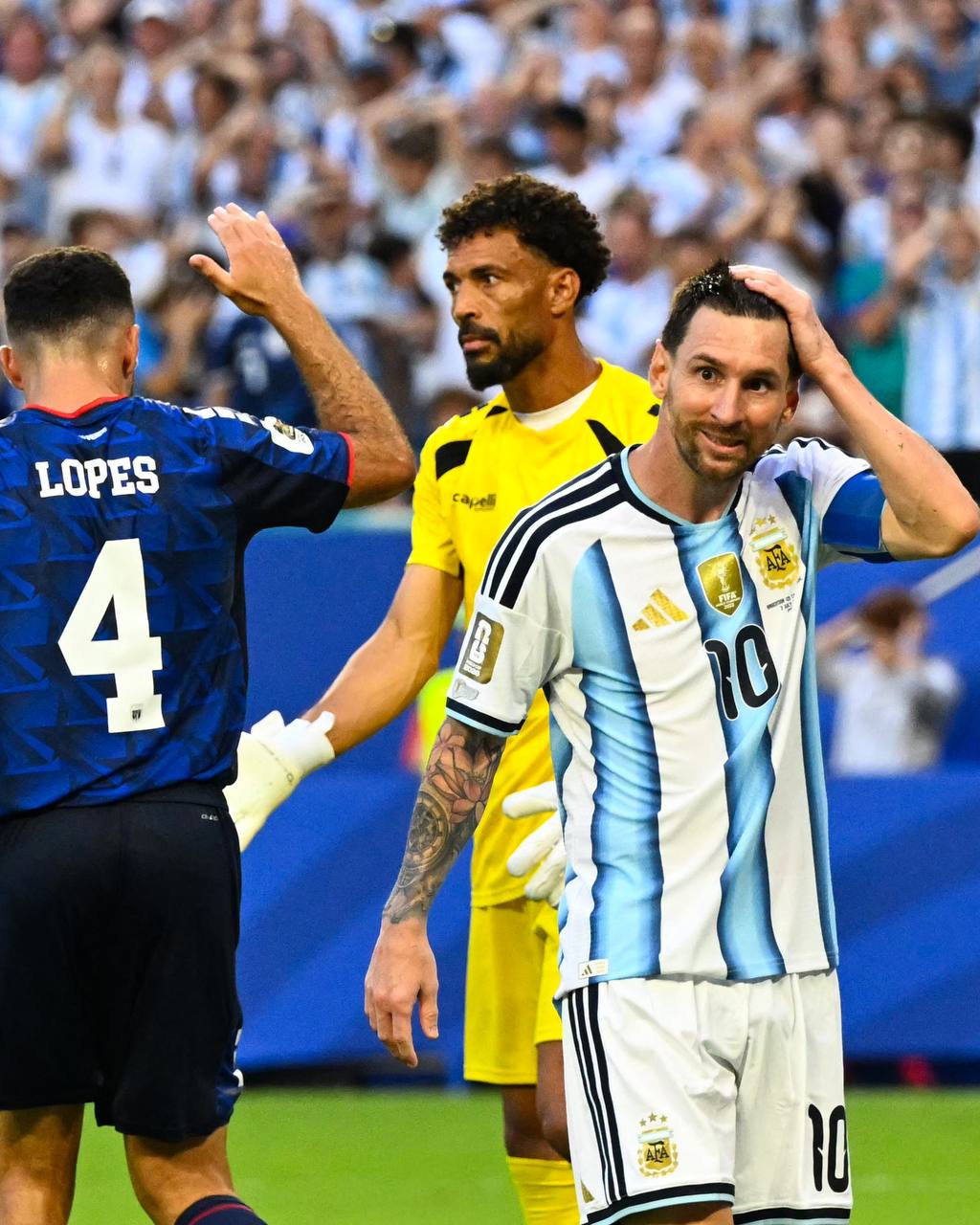
From the moment Lionel Messi opened the scoring in the 29th minute, something felt different about this match. Messi controlled a lofted Lisandro Martínez pass with the outside of his left boot — one of those moments that makes you wonder if he operates on a different plane of existence — and flicked it past the onrushing Vozinha to make it 1-0. It was his record-extending 20th World Cup goal, scored in his 30th men’s World Cup appearance — increasing his own record for most games played at a World Cup. Cristiano Ronaldo is second with 26.

But Cape Verde? They didn’t care about the records. The Blue Sharks, playing in their first World Cup, had twice come from a goal down to silence the vast majority of the crowd of 64,478 packed into a hot and humid Miami Stadium. First, Deroy Duarte collected Ryan Mendes’ pass just before the hour mark, controlled with his left foot, and arrowed a low finish right through Lisandro Martínez’s legs and past Emiliano Martínez. The place went electric. The stunner was on.

The match went to extra time, and Argentina looked nervy, blunt, desperate. Lisandro Martínez — the Manchester United centre-back — rifled one in from a Messi corner in the 92nd minute to put the champions back ahead. Relief flooded the stands. But Cape Verde weren’t done.

On 103 minutes, Sidny Lopes Cabral sensationally drew the African side level by cutting inside from the left and curling a right-footed shot into the far corner. One of the goals of the entire tournament. The sort of goal you don’t expect from a second-division goalkeeper’s team. The sort of goal that makes this sport absolutely beautiful.

Argentina panicked. The penalty shootout loomed. And then, in the 111th minute, Messi curled a corner into the box. Cristian Romero rose to head home off the arm of Cape Verde centre-back Diney Borges — an own goal, deflected in chaos, but it didn’t matter. The ball was in the net. Argentina were ahead. Even then, Emiliano Martínez needed to make two smart saves to keep Cape Verde from a third equalizer.

When the final whistle blew, Argentina hadn’t just won a football match — they had survived a brush with sporting immortality. Argentina avoided statistically the biggest upset in World Cup knockout history, as the No. 1 ranked FIFA side against No. 67.

And Cape Verde? They leave this tournament with their heads held sky-high. Their goalkeeper Vozinha — who plays in the second division in Portugal — made eight saves, denying Messi’s right-footed finish, a deflected free kick, and an attempt in extra time. A man playing in near-obscurity, becoming a World Cup legend overnight. Former England defender Gary Neville described their efforts as “Herculean.”

Messi now has seven goals at this tournament, one clear of Mbappé in the race for the Golden Boot. He has scored 12 times during his record eight-match World Cup scoring streak.

Argentina face Egypt in Atlanta on Tuesday in the Round of 16. But make no mistake — if they play like that again, Egypt’s Mohamed Salah will have something to say about it.
The champions are through. But barely.
Man of the Match: Messi